SUP Board Cutout in Portrait
About SUP Board
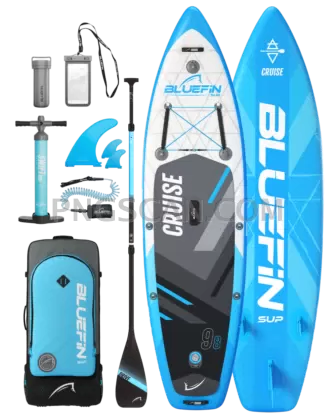
Most paddle board photos come glued to a beach or a lake, and cutting them loose eats half an hour. This sup board png skips that part completely. The board sits alone on a clear canvas, edges trimmed along the deck pad and the nose, so you can slide it over a sunset gradient, a map, or a plain white product grid and nothing awkward tags along.
Rental shops mock up price boards with it, water sports clubs pin it into signup posters, and travel bloggers stack it beside a cooler and a towel for a packing list graphic. School projects on lake sports use it too, since a portrait paddle board cutout slots neatly into a page without cropping the tail off.
Angle it about fifteen degrees and add a soft shadow under the fin, and the board stops looking pasted and starts looking placed. Another quick win: the tall shape works as a natural divider between two text columns, almost like a vertical rule with personality.
The file measures 1000x1250 pixels, portrait, with natural coloring rather than a heavy filter, so it prints cleanly at small poster sizes and stays crisp on phone screens. Licensing here is open for personal and fan projects; if money or a client is involved, check the license page first and swap in your own photo when the brand on a board matters. Explore more SUP Board PNG images in our gallery.
Frequently Asked Questions
Answers about this SUP Board PNG — transparent background, size, download, and permitted use.
For anything up to roughly A5 it looks sharp. Past that, the portrait frame starts to soften, so keep it as a side element on a full poster rather than the giant hero shape.
Yes. There is no leftover white box around the rails, so the board reads fine on navy, black, or a deep ocean photo. Just watch the fin area, which is the thinnest part of the cutout.
The board is shown standing upright, which is how you would prop one against a wall. That vertical shape fits story posts, roll-up banners, and menu columns far better than a sideways board.
Easily. Because the coloring is natural and not stylised, a hue shift or a clipped gradient over the deck area reads as a believable different board rather than a paint smear.
More from the SUP Board Collection

Related Transparent PNG Images

Dental Implant

Dental Implant 533x456

Dental Implant 600x600

Dental Implant 936x547

Dental Implant 800x600